

2026 Ford Escape® near Johnson City, TN
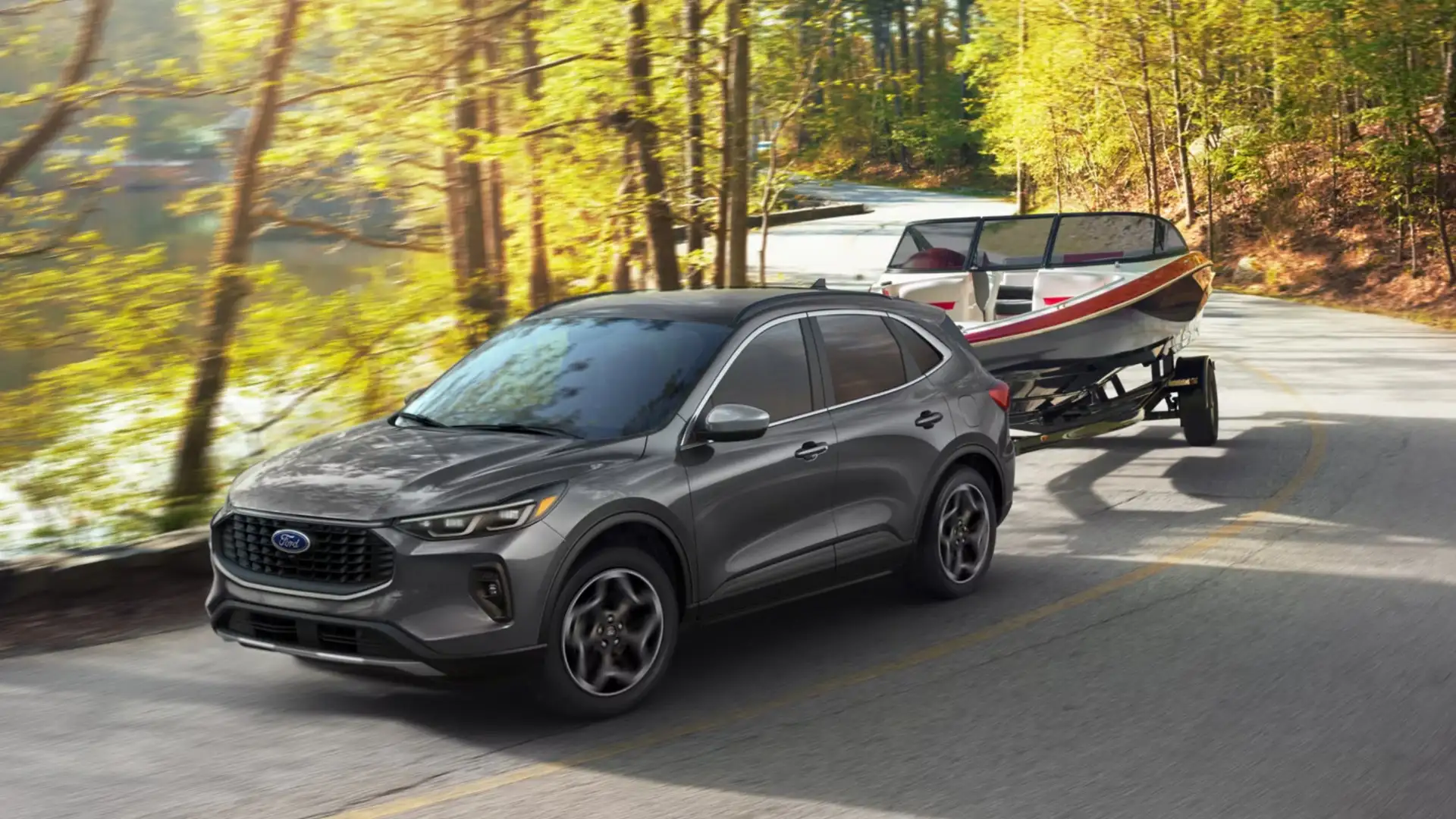
The 2026 Ford Escape® is engineered as a compact SUV platform built around modular powertrain flexibility and measured mechanical efficiency. This model year continues Ford’s established approach of offering multiple propulsion systems within a single architecture, allowing drivers to select a configuration that aligns with efficiency targets, towing requirements, and daily operational demands. The 2026 Ford Escape® is available with EcoBoost® gasoline engines, a full hybrid system, and a plug-in hybrid electric configuration, all integrated into a unified chassis and drivetrain layout. Each powertrain is calibrated for predictable output, controlled thermal management, and consistent drivability across varied conditions.
Gasoline-powered variants rely on turbocharged EcoBoost® engines designed to deliver a balance of horsepower and torque without excessive fuel consumption. The available 2.0L EcoBoost® engine produces up to 250 horsepower when properly equipped and supports higher towing thresholds compared to other configurations. Hybrid and plug-in hybrid models utilize a 2.5L Atkinson-cycle inline four-cylinder engine paired with an electric motor system. In plug-in hybrid form, the combined system output reaches 210 total system horsepower, integrating electric propulsion with gasoline operation through a seamless power-split architecture. This design supports electric-only operation at lower speeds while retaining internal combustion support for extended driving range.
Power Delivery and Drivetrain Coordination
Power delivery in the 2026 Ford Escape® is managed through electronically controlled transmissions engineered to maintain smooth acceleration and efficient gear transitions. Gasoline models utilize automatic transmissions calibrated to keep the engine within optimal operating ranges, reducing unnecessary load during steady-state cruising. Hybrid and plug-in hybrid variants incorporate continuously variable transmission technology designed to manage power flow between the internal combustion engine and electric motor without stepped gear changes.
Front-wheel drive is standard across most configurations, supporting reduced mechanical complexity and improved fuel efficiency. Available all-wheel drive systems use electronically controlled torque distribution to redirect power between the front and rear axles as traction demands change. This system operates automatically and continuously, requiring no driver input. Sensors monitor wheel slip, throttle position, and steering angle to determine optimal torque allocation, contributing to improved stability during adverse weather or uneven road surfaces.
Towing Capability and Mechanical Load Management
The 2026 Ford Escape® platform is engineered to support light-duty towing across multiple configurations. When equipped with the 2.0L EcoBoost® engine and the available Class II Trailer Tow Package, the 2026 Ford Escape® achieves a maximum towing capacity of up to 3,500 pounds. Other engine configurations provide towing capacities ranging from 1,500 to 2,000 pounds, depending on drivetrain and equipment selection. Cooling systems, transmission gearing, and suspension components are designed to manage the additional thermal and mechanical loads associated with towing without compromising vehicle longevity.
Electronic stability control systems integrate trailer sway control when towing equipment is installed. This system applies selective braking and throttle modulation to maintain directional stability during crosswinds or sudden steering inputs. These features are integrated into the vehicle’s broader stability management framework and operate without altering normal driving behavior when towing equipment is not present.
Exterior Design Guided by Aerodynamic Efficiency
The exterior design of the 2026 Ford Escape® emphasizes aerodynamic efficiency and structural function rather than ornamental elements. Body contours are shaped to reduce drag, contributing to improved fuel economy and reduced wind noise at highway speeds. The front fascia integrates airflow channels that direct air toward cooling components while minimizing turbulence around the vehicle body. Roofline geometry and rear body tapering further assist in managing airflow separation behind the vehicle.
Lighting systems utilize LED technology for both forward illumination and rear visibility. LED components offer longer operational life and reduced power consumption compared to traditional lighting systems. Wheel designs and tire selections are chosen to balance rolling resistance, ride comfort, and handling response. These exterior components are engineered to integrate with the suspension and braking systems without introducing unnecessary weight or complexity.
Interior Dimensions and Space Utilization Strategy
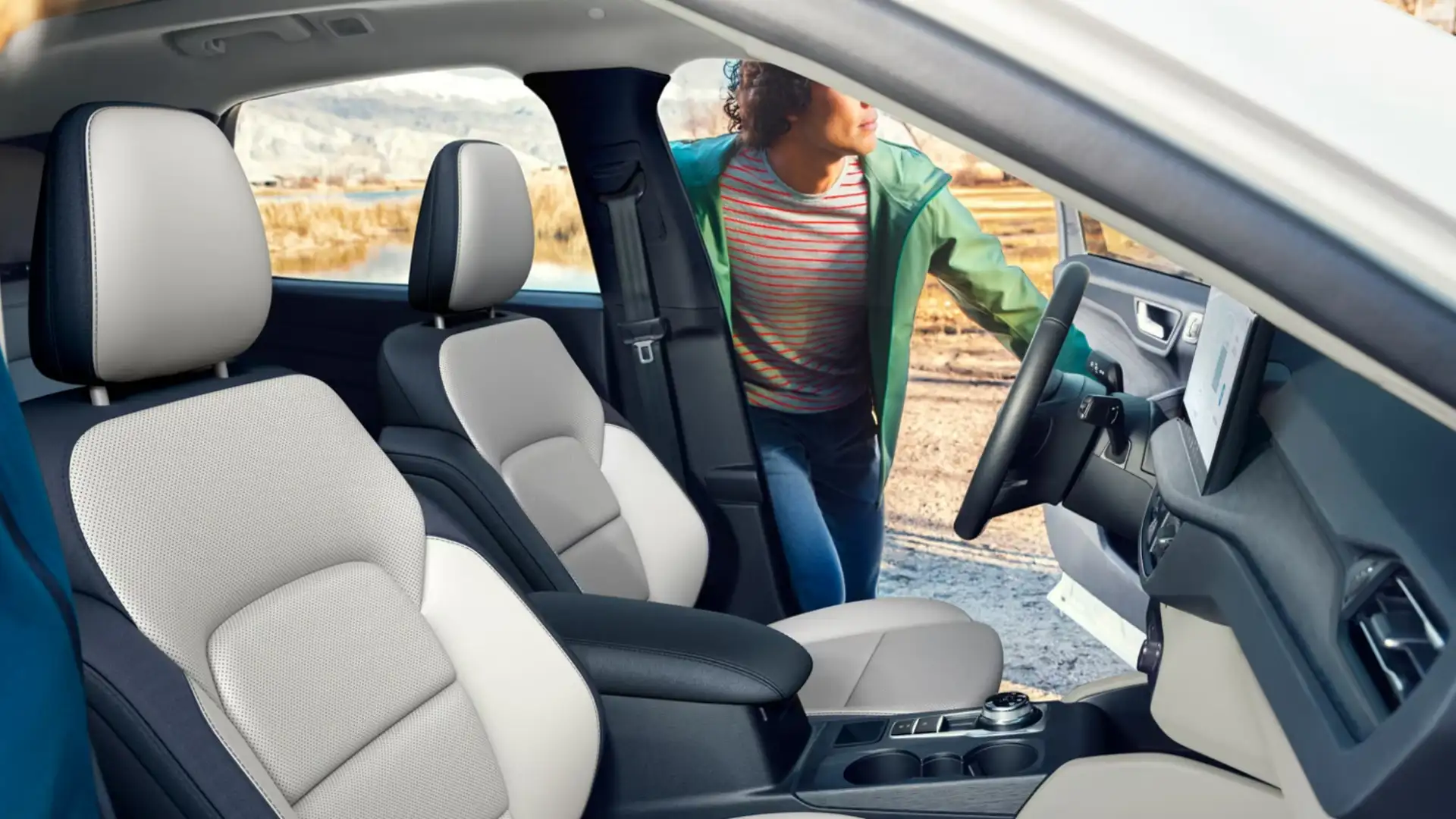
Interior engineering in the 2026 Ford Escape® focuses on maximizing occupant space within a compact exterior footprint. Front-row seating provides up to 42.4 inches of legroom, supporting extended driving comfort and ergonomic seating positions. Second-row legroom reaches up to 38.9 inches, allowing adequate space for rear passengers without reducing cargo flexibility. Seating geometry is optimized to maintain consistent headroom and sightlines for both rows.
Cargo capacity varies based on powertrain configuration due to battery placement in hybrid models. EcoBoost® variants provide 37.5 cubic feet of cargo space behind the second row and up to 65.4 cubic feet with the rear seats folded. Hybrid and plug-in hybrid models offer 34.4 cubic feet behind the second row and a maximum of 60.8 cubic feet with the seats down. The rear seat folding mechanism is engineered for ease of operation and maintains a relatively flat load floor to support efficient cargo loading.
Digital Interfaces and Vehicle Information Systems
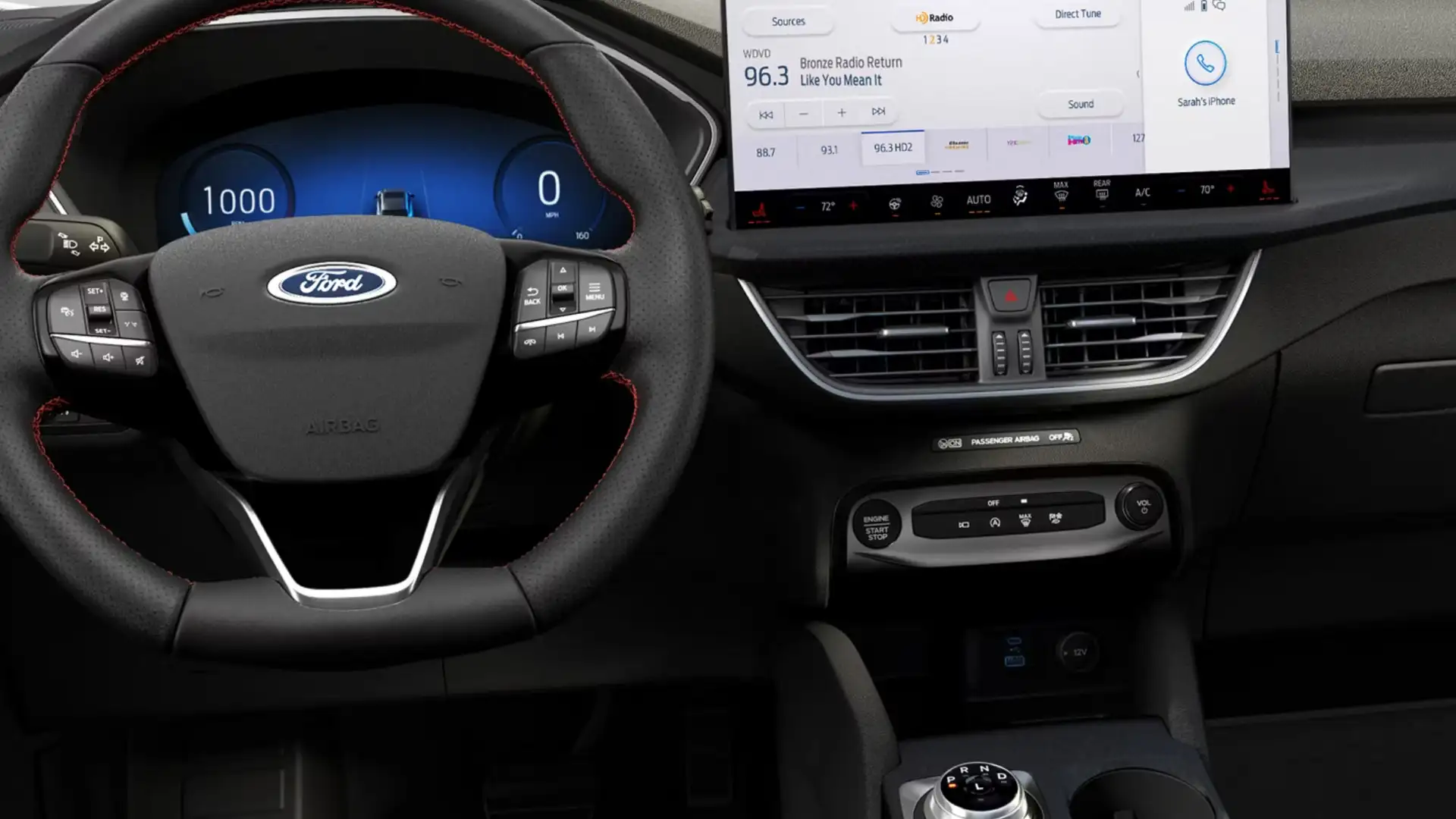
The 2026 Ford Escape® integrates digital instrumentation designed to present vehicle data clearly and consistently. The instrument cluster displays speed, fuel or energy usage, and system status indicators in a format that minimizes distraction. Hybrid and plug-in hybrid models include dedicated energy flow displays that illustrate power distribution between the gasoline engine, electric motor, and battery system. These displays support driver awareness of system operation without requiring specialized knowledge.
Central touchscreen systems manage vehicle settings, connectivity functions, and navigation interfaces. Software architecture is designed to support over-the-air updates, allowing system enhancements and refinements without physical service intervention. User interface layouts prioritize direct access to frequently used functions and minimize layered menus, supporting straightforward operation during driving.
Advanced Driver-Assist and Safety System Integration
Safety engineering in the 2026 Ford Escape® relies on integrated sensor networks and electronic control systems. Available Ford Co-Pilot360® Assist+ includes adaptive cruise control with stop-and-go capability, lane centering assistance, and predictive speed assist. These systems work together to maintain consistent vehicle spacing, lane positioning, and speed adaptation in response to traffic conditions.
Additional driver-assist features include automatic emergency braking, blind spot monitoring, rear cross-traffic alert, and a rearview camera system. Radar sensors and cameras continuously monitor surrounding areas and provide alerts when potential hazards are detected. These systems are calibrated to intervene gradually, prioritizing driver control while offering assistance when necessary. The integration of these features supports a cohesive safety framework rather than isolated functions.
Structural Engineering and Platform Integrity
The 2026 Ford Escape® platform incorporates high-strength steel and reinforced structural zones to manage impact forces during collision events. Load paths are engineered to distribute energy away from the passenger compartment, supporting occupant protection without excessive structural weight. Hybrid battery placement is carefully engineered to maintain balanced weight distribution and preserve predictable handling characteristics.
Noise, vibration, and harshness mitigation is addressed through sound-absorbing materials, isolated mounting points, and precision body assembly techniques. These measures reduce road noise and mechanical vibration transmission into the cabin, supporting a controlled driving environment during both urban and highway operation.
Suspension Tuning and Steering Response
Suspension systems in the 2026 Ford Escape® are tuned to balance ride comfort and handling stability. Front and rear suspension components are calibrated to absorb road irregularities while maintaining consistent tire contact with the road surface. This tuning supports controlled cornering behavior and predictable braking response.
Electric power-assisted steering provides variable assist levels based on vehicle speed. Low-speed steering effort is reduced to improve maneuverability in parking environments, while higher-speed assist levels are adjusted to support directional stability. Steering feedback is engineered to remain consistent across different driving conditions, contributing to driver confidence without excessive sensitivity.
Schedule a Test Ride near Johnson City, TN
To fully assess the engineering and system integration of the 2026 Ford Escape®, a scheduled test drive provides direct exposure to its performance characteristics and driver-assist technologies. During a test drive, drivers can evaluate power delivery, steering response, and braking behavior across varied road conditions. The experience also allows firsthand interaction with the vehicle’s digital interfaces and safety systems. At Friendship Ford of Bristol near Johnson City, TN, our team can coordinate a test drive that highlights powertrain options, interior space efficiency, and advanced driver-assist functionality. Scheduling a visit offers a practical opportunity to examine how the vehicle’s technical specifications translate into everyday operation.
