

2026 Ford Super Duty® near Kingsport, TN
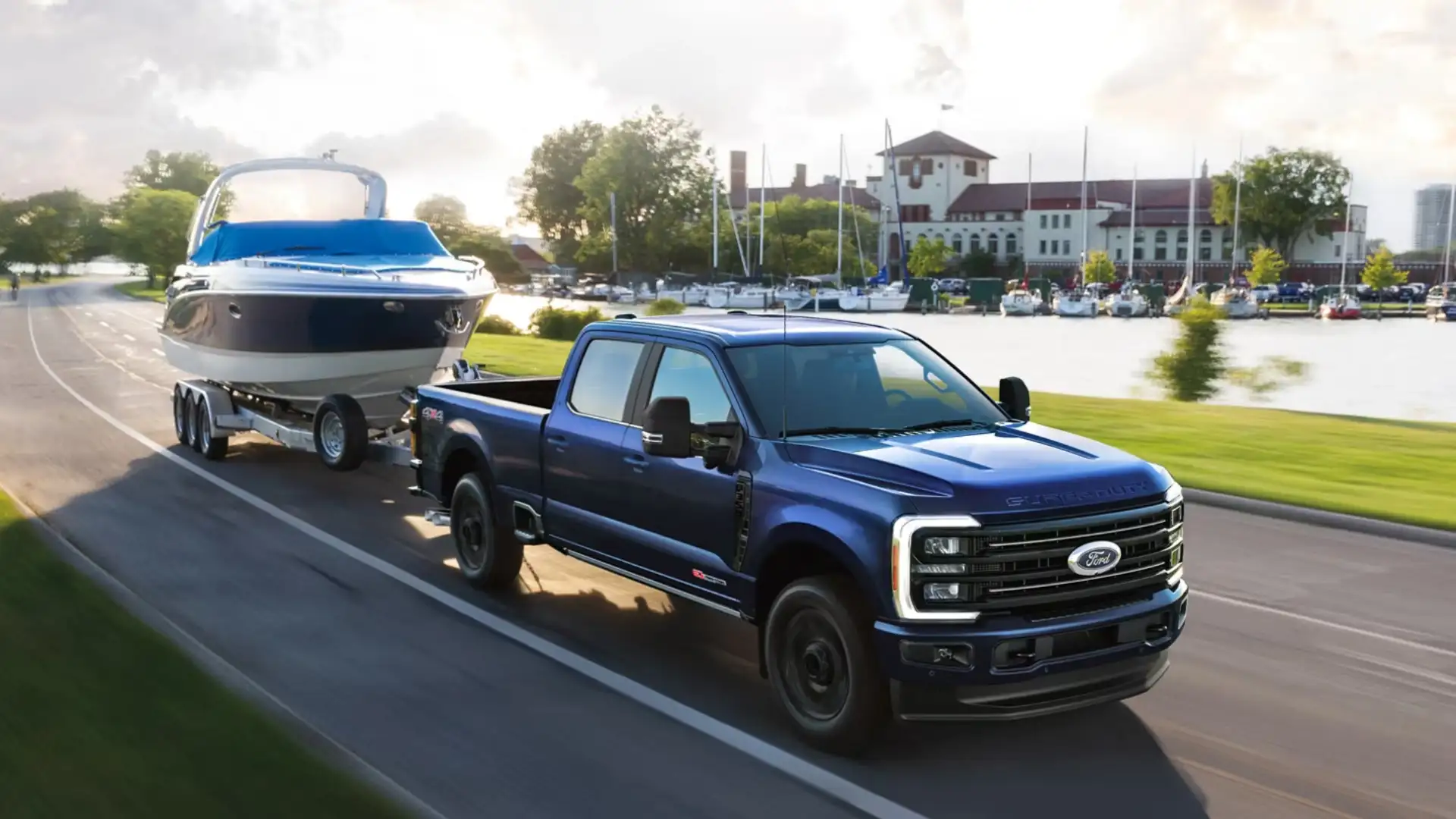
The 2026 Ford Super Duty® is engineered to support demanding workloads through a combination of high-capacity powertrains, reinforced structural components, and integrated vehicle systems designed for sustained operation. This model continues the brand’s heavy-duty truck development with a focus on measurable performance metrics, configuration flexibility, and long-term durability. Each available variant is designed to address specific towing, hauling, and operational requirements while maintaining consistent performance across varied driving conditions.
The Super Duty® platform serves applications ranging from commercial transport and construction support to large-scale recreational towing. Its design priorities remain centered on payload stability, drivetrain strength, and controlled power delivery. The 2026 Ford Super Duty® refines these elements through updated engine offerings, enhanced trailering technology, and expanded driver-assist systems, all integrated within a chassis engineered for high load tolerance.
Powertrain Architecture and Engine Capability
The 2026 Ford Super Duty® offers four engine options engineered to meet varying output demands. The standard gasoline engine is a 6.8-liter two-valve DEVCT naturally aspirated V8. This engine produces 405 horsepower at 5,000 rpm and delivers consistent torque characteristics suited for general hauling and fleet-oriented applications. Its design emphasizes mechanical simplicity, predictable throttle response, and compatibility with heavy-duty transmission calibration.
An available upgrade within the gasoline lineup is the 7.3-liter two-valve DEVCT naturally aspirated V8. This engine increases output to 430 horsepower at 5,500 rpm and provides additional torque capacity for larger trailers and higher payload requirements. Its larger displacement supports improved low-speed pulling capability while maintaining stable performance during extended operation.
Diesel powertrain options include the 6.7-liter Power Stroke® V8 turbo diesel engine, which generates 475 horsepower at 2,600 rpm. This engine is engineered to deliver substantial torque at lower engine speeds, supporting heavy towing while minimizing strain on drivetrain components. It is designed for compatibility with B20 biodiesel blends and incorporates thermal management systems to maintain operating efficiency under load.
The highest-output option is the 6.7-liter High Output Power Stroke® V8 turbo diesel engine. This configuration delivers 500 horsepower and increased torque output for maximum towing and hauling scenarios. The engine supports sustained high-load operation through reinforced internal components and optimized turbocharger calibration.
Each engine pairs with a heavy-duty transmission engineered to manage high torque loads and repeated towing cycles. Rear-wheel drive is standard across the lineup, with four-wheel drive available to improve traction and stability in variable surface conditions.
Towing and Payload Performance Metrics
Towing and payload capability define the operational capacity of the 2026 Ford Super Duty®. When properly equipped, the vehicle supports a maximum available conventional towing capacity of up to 40,000 pounds. This figure depends on engine selection, axle configuration, and drivetrain setup, allowing operators to tailor the vehicle to specific hauling requirements.
Payload capacity varies by powertrain and configuration. Gasoline-powered models provide a maximum available payload rating of up to 8,000 pounds. Diesel-powered configurations offer up to 6,952 pounds of payload capacity. These ratings reflect the integration of reinforced frame rails, upgraded suspension systems, and heavy-duty axle assemblies designed to distribute weight efficiently.
Trailering support systems operate in coordination with the drivetrain to maintain stability under load. Integrated trailer brake control enables consistent braking performance when towing large trailers. Trailer sway control monitors vehicle motion and applies selective braking to help maintain directional control. Selectable drive modes adjust throttle response, transmission behavior, and traction control parameters based on load conditions.
Structural Engineering and Chassis Design
The 2026 Ford Super Duty® is constructed on a fully boxed high-strength steel frame designed to resist torsional stress during towing and hauling. Reinforced crossmembers and strategically placed mounting points enhance load distribution across the chassis, improving durability during repeated high-load use.
Aluminum-alloy body panels reduce overall vehicle weight without compromising structural integrity. This material choice supports improved payload efficiency while maintaining resistance to corrosion in work environments. Critical load-bearing areas retain steel construction to ensure structural stability.
Suspension systems are calibrated for load control and durability. Solid rear axles and heavy-duty leaf springs provide stability when carrying high payloads. Available dual rear wheel configurations further increase load capacity and improve lateral stability during towing operations.
Vehicle dimensions vary by cab and bed configuration. Base curb weight ranges from approximately 5,697 pounds to 8,627 pounds depending on equipment and drivetrain. The width with mirrors folded measures 85.3 inches, supporting maneuverability while maintaining a broad stance for load stability.
Technology Integration for Operational Control
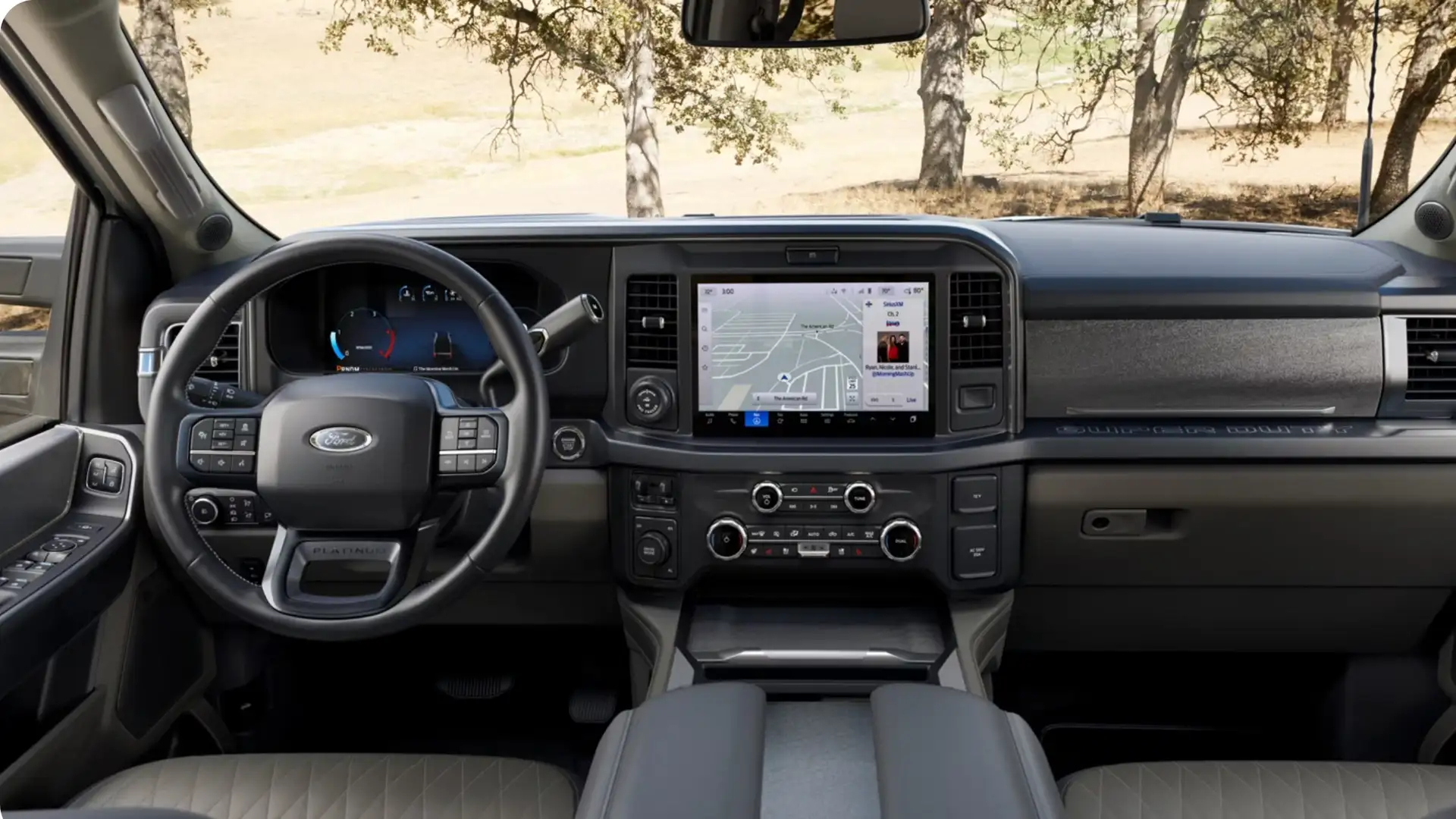
Technology systems in the 2026 Ford Super Duty® are designed to support task execution and vehicle management. The available SYNC® 4 system functions as the primary interface for navigation, connectivity, and vehicle system access. Voice-activated controls allow drivers to operate supported features without removing hands from the steering wheel.
A digital instrument cluster provides vehicle data related to speed, engine output, towing status, and system alerts. When towing, the display can present trailer-specific information to assist with load monitoring and maneuvering.
Camera systems support visibility during hitching, reversing, and parking. Rearview camera functionality improves alignment accuracy, particularly when connecting trailers. Available trailer camera options extend visual coverage to improve awareness in confined spaces.
Advanced trailering features include selectable trailer profiles that store trailer dimensions and braking preferences. Onboard scale functionality assists with estimating load weight, supporting compliance with payload limits. Integrated lighting controls enable trailer light checks without external assistance.
Interior Configuration and Functional Layout
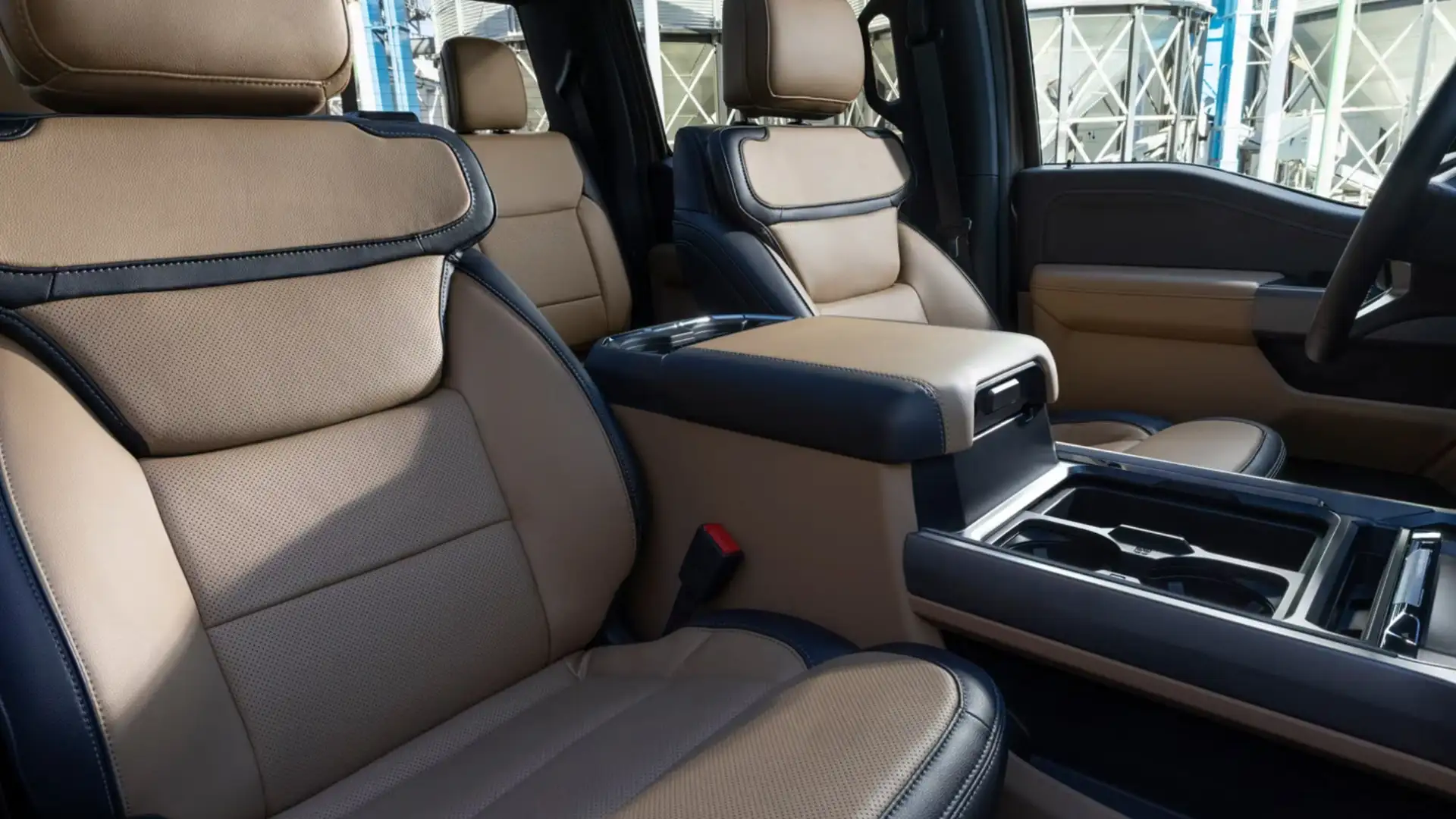
The interior of the 2026 Ford Super Duty® is configured to support extended use in demanding environments. Seating capacity reaches up to six occupants depending on cab selection. Materials are selected for durability and ease of maintenance, supporting repeated entry and exit during work operations.
The driver-focused layout prioritizes accessibility to primary controls. Steering wheel-mounted functions provide access to audio, communication, and vehicle settings. Available power-adjustable pedals support ergonomic positioning for drivers of varying statures.
Storage solutions are integrated throughout the cabin to accommodate tools, documents, and electronic devices. Console and door storage areas are sized for work-related equipment, supporting organization during daily use.
Cabin insulation materials reduce vibration and external noise, contributing to a controlled driving environment during long operating periods or extended towing sessions.
Safety and Driver-Assist Systems
Safety systems in the 2026 Ford Super Duty® combine passive protection with driver-assist technologies. Standard equipment includes front airbags with passenger-side deactivation, front seat side airbags, and the Safety Canopy® system with side-curtain airbags.
Occupant protection features also include the Belt-Minder® system, child tether anchors, and the SOS Post-Crash Alert System. These systems activate automatically in the event of a collision to support occupant safety and hazard awareness.
Driver-assist technologies include Pre-Collision Assist® with Automatic Emergency Braking and Forward Collision Warning. These systems monitor traffic conditions and provide alerts or braking assistance when a potential frontal collision is detected. They are designed to supplement driver awareness and do not replace attentive driving.
Security features include remote keyless entry, the SecuriLock® passive anti-theft system, and integrated security service compatibility when activated.
Configuration Range and Application Flexibility
The 2026 Ford Super Duty® lineup offers multiple cab styles, bed lengths, and drivetrain configurations. Regular Cab, SuperCab, and Crew Cab options allow operators to select passenger capacity and interior space based on operational needs.
Rear-wheel drive is standard, with four-wheel drive available to enhance traction in off-road or low-traction environments. Single rear wheel and dual rear wheel configurations support different payload and towing requirements.
Exterior design prioritizes functional visibility and durability. Lighting placement supports nighttime operation, and body panel design facilitates ease of access for maintenance and loading.
Schedule a Test Ride near Kingsport, TN
Drivers interested in assessing the operational capabilities of the 2026 Ford Super Duty® can schedule an evaluation drive through Friendship Ford of Bristol near Kingsport, TN. This opportunity allows prospective operators to experience engine response, trailering systems, and driver-assist technologies under controlled conditions. A guided evaluation provides insight into how payload capacity, towing stability, and integrated technology function during typical driving scenarios. Reviewing these systems in motion supports informed decision-making for work or towing applications. Scheduling a test drive enables a detailed review of available configurations aligned with specific operational requirements.
