

2026 Ford Transit® in Kingsport, TN
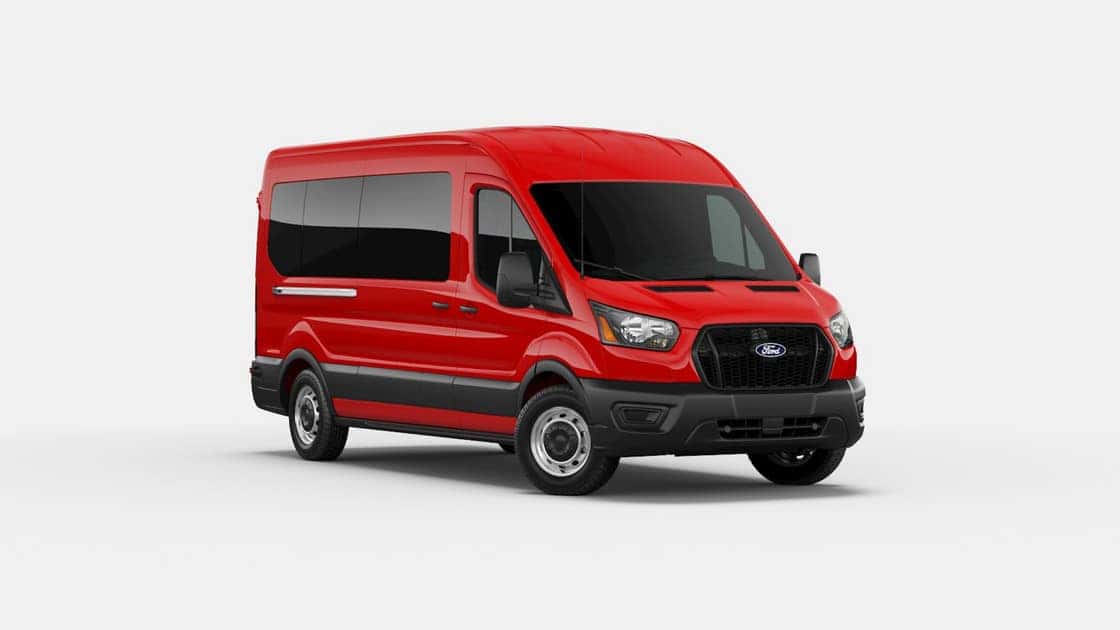
The 2026 Ford Transit® provides configurable capability for transporting cargo, carrying passengers, towing equipment, and supporting extended travel. Its available powertrains include two 3.5-liter V6 engines, each paired with an advanced 10-speed transmission. Operators can select a 25-gallon fuel tank or an available 31-gallon extra-capacity tank. Available Intelligent All-Wheel Drive supports traction and handling without raising the load floor or seat height. Cargo van and passenger van configurations carry separate maximum payload ratings that reflect their different operating roles. The Transit lineup also offers dedicated towing equipment and multiple vehicle weight ratings for varied transportation requirements.
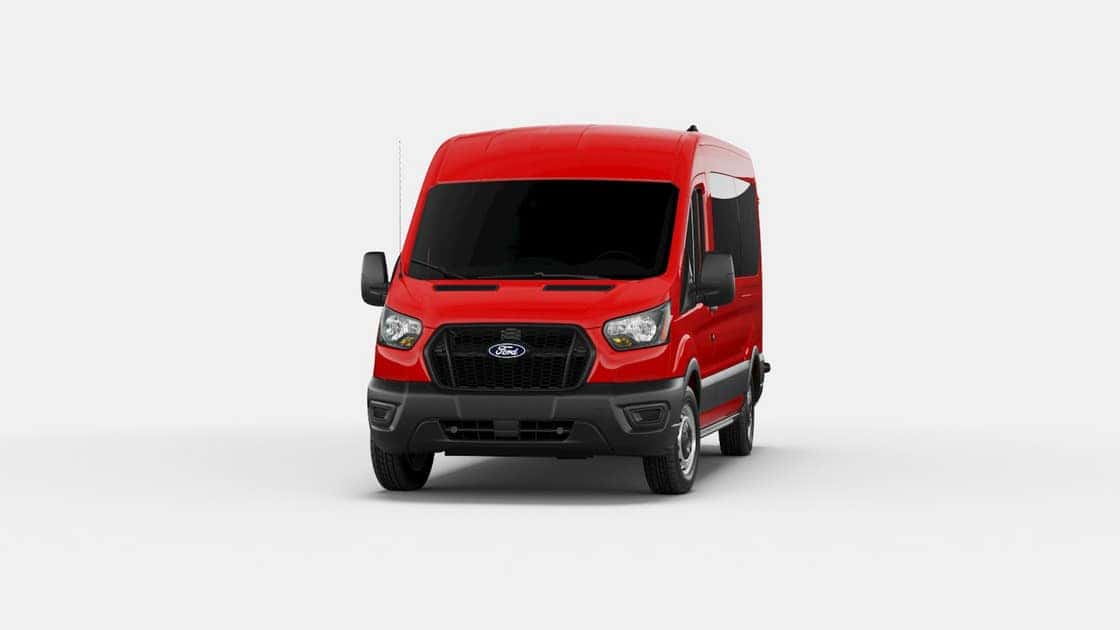
Engine performance and transmission
The 2026 Ford Transit® offers two engines with different horsepower and torque outputs. Both use a 3.5-liter V6 configuration, but their specifications provide distinct performance characteristics. Ford pairs each engine with an advanced 10-speed transmission engineered to deliver smooth shifts and responsive performance. This shared transmission creates a consistent foundation across the available gasoline powertrains. Operators can select an engine by considering the output required for their planned cargo, passenger, towing, or travel applications.
3.5-liter V6 engine
The 3.5-liter V6 engine uses a Ford-designed port-fuel and direct-injection system identified as PFDi. This engine produces 275 horsepower and 260 lb-ft of torque. Its injection system forms an integrated part of the engine design rather than functioning as a separate equipment option. Ford pairs the V6 with the advanced 10-speed transmission. Together, these components create one of the two available powertrain configurations for the 2026 Ford Transit®.
The 275-horsepower rating defines the engine’s power output, while the 260 lb-ft figure measures its torque. Ford positions this naturally aspirated V6 as a direct alternative to the available EcoBoost® engine. Both engines have the same listed displacement and cylinder count, but they deliver different output ratings. The PFDi system distinguishes the fuel-delivery design of the standard V6 within the available powertrain range. These documented specifications allow operators to evaluate the engine according to the demands of their selected Transit configuration.
3.5-liter EcoBoost® V6 engine
The available 3.5-liter EcoBoost® V6 produces 300 horsepower and 400 lb-ft of torque. These ratings give operators clearly defined specifications to consider when selecting an engine. Compared with the naturally aspirated V6 in the Transit lineup, the EcoBoost® engine provides an additional 25 horsepower and 140 lb-ft of torque. Ford also connects this engine to the advanced 10-speed transmission. This combination expands the available powertrain choices while retaining the same transmission configuration.
The 400 lb-ft torque rating represents the largest numerical difference between the two available engines. Its 300-horsepower output is also the higher rating of the two choices. The advanced 10-speed transmission supports the EcoBoost® engine while providing the smooth-shifting performance specified for the Transit. Operators do not need to select another transmission to access the EcoBoost® engine’s higher horsepower and torque figures. Instead, the engine selection determines the documented output, while the 10-speed transmission remains common to both powertrains.
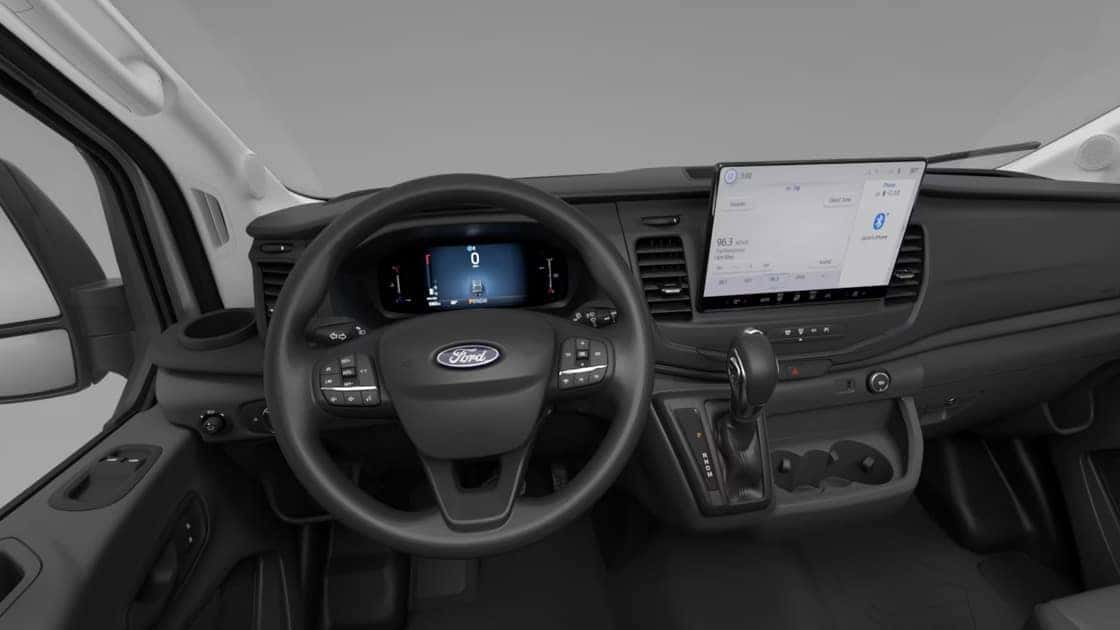
Towing and payload capability
The 2026 Ford Transit® combines its available engines with multiple vehicle weight ratings, distinct payload capacities, and dedicated towing equipment. These elements allow the van to support a range of transportation and work requirements. Ford provides separate maximum payload ratings for cargo van and passenger van configurations. The Transit can also tow when properly configured with the Heavy-Duty Trailer Tow Package. Together, these specifications define the principal carrying and trailering capabilities available across the lineup.
Heavy-Duty Trailer Tow Package
A properly configured Transit van equipped with the Heavy-Duty Trailer Tow Package can tow up to 4,500 pounds. The package provides the principal hardware and electrical provisions associated with the listed maximum towing capacity. Its equipment includes wiring provisions and a connector assembly for trailer-related electrical connections. Ford also includes a frame-mounted hitch receiver and rear jumpers. These components create a coordinated towing equipment group instead of supplying only a hitch receiver.
The frame-mounted hitch receiver connects the towing hardware directly to the vehicle frame. Wiring provisions, the connector assembly, and rear jumpers support the corresponding electrical requirements. Ford identifies the complete package as the equipment required for the Transit van’s maximum towing figure. The 4,500-pound rating provides a defined limit for operators planning to use a trailer. Proper vehicle configuration and the presence of the Heavy-Duty Trailer Tow Package remain essential considerations when evaluating towing requirements.
Cargo van payload
The Transit cargo van provides a maximum payload rating of 5,103 pounds. This figure applies specifically to cargo van configurations and represents the higher of the two stated maximum payload ratings. Ford complements this carrying capability with a cargo area designed to accommodate gear and other transported items. The Transit lineup also offers a range of vehicle weight and payload ratings to address different applications. The selected configuration determines the precise rating that applies to an individual vehicle.
Payload describes the weight carried by the vehicle rather than the weight pulled behind it. The maximum 5,103-pound figure therefore applies to materials, equipment, gear, and other items carried by a properly configured cargo van. Ford presents payload flexibility alongside engine selection and cargo space as a significant part of Transit functionality. The availability of different vehicle weight and payload ratings allows operators to match the van more closely to their carrying requirements. Although 5,103 pounds is the stated maximum, individual configuration details establish the applicable capacity.
Passenger van payload
The 2026 Ford Transit® passenger van offers a maximum payload rating of 3,401 pounds. This separate figure applies to passenger van configurations and distinguishes their carrying capability from that of cargo vans. Ford describes the Transit as capable of transporting gear or an entire crew, connecting passenger accommodation with useful load capacity. The passenger van’s maximum payload remains lower than the figure listed for cargo van models. Operators can use this difference when considering a configuration for passengers, equipment, or a combination of both.
The stated passenger van payload gives operators a defined capacity reference without treating every Transit configuration as identical. Ford offers a range of vehicle weight and payload ratings across the model lineup. This variety supports different combinations of passenger and cargo requirements. The two engine choices and advanced 10-speed transmission complement that flexibility with separate levels of horsepower and torque. A selected configuration can therefore combine passenger capacity, payload capability, powertrain output, and available traction equipment according to its intended function.
Fuel capacity and operating flexibility
The 2026 Ford Transit® provides two available fuel tank capacities for its gasoline powertrains. A 25-gallon tank serves as the standard-capacity choice, while an available 31-gallon tank offers additional fuel capacity. The larger tank increases the amount of fuel the vehicle can carry between stops. Ford associates this extra capacity with the ability to travel farther before refueling. This choice can support operating schedules that place importance on reducing the frequency of fuel stops.
Standard and extra-capacity fuel tanks
Both the 3.5-liter V6 and the 3.5-liter EcoBoost® V6 can be paired with the 25-gallon tank or the available 31-gallon tank. The six-gallon difference provides a measurable capacity increase for operators who select the larger option. Ford identifies the 31-gallon unit as an extra-capacity fuel tank. Its primary functional benefit comes from increasing the amount of fuel carried aboard the van. Fuel tank selection adds another configuration decision alongside engine, drivetrain, payload, and towing equipment choices.
Selecting the available 31-gallon tank does not change the documented horsepower or torque rating of either engine. Instead, it alters the total volume of fuel that the Transit can carry. The naturally aspirated 3.5-liter V6 continues to produce 275 horsepower and 260 lb-ft of torque. The 3.5-liter EcoBoost® V6 retains its ratings of 300 horsepower and 400 lb-ft of torque. Both engines also continue to use the advanced 10-speed transmission, allowing fuel capacity and powertrain output to remain separate configuration considerations.
Traction, handling, and functional packaging
Available Intelligent All-Wheel Drive adds another functional dimension to the 2026 Ford Transit®. Ford designed the system to help maximize traction and enhance handling. The system integrates into the vehicle without requiring a higher load floor or increased seat height. This packaging preserves important access, loading, and seating characteristics while adding available all-wheel-drive capability. Operators can therefore consider additional traction support without accepting changes to those two specified dimensions.
Intelligent All-Wheel Drive
Intelligent All-Wheel Drive is available equipment rather than a standard feature on every Transit configuration. Its design focuses on helping the vehicle maximize traction and enhance handling. Ford integrates the system into the van’s existing packaging instead of using an arrangement that raises the load floor. The system also maintains the established seat height. This approach connects added drivetrain capability with the functional requirements of the passenger compartment and cargo area.
Maintaining the load-floor height has practical relevance in a van designed to move equipment, gear, or other cargo. Ford achieves this packaging result without specifying a separate raised-floor arrangement for all-wheel-drive models. The unchanged seat height also preserves the intended seating position when operators select the available system. These details allow the drivetrain configuration to support traction without altering two important interior measurements. Intelligent All-Wheel Drive, consequently, adds handling and traction support while maintaining the specified load floor and seating heights.
Coordinated capability
The 2026 Ford Transit® combines its principal functional systems through a broad selection of configurations. Operators can choose the 275-horsepower 3.5-liter V6 or the available 300-horsepower 3.5-liter EcoBoost® V6. They can also select the available 31-gallon extra-capacity fuel tank when additional onboard fuel capacity suits their operating needs. Intelligent All-Wheel Drive provides available traction and handling support without increasing the load floor or seat height. Maximum payload ratings of 5,103 pounds for cargo vans and 3,401 pounds for passenger vans accompany a maximum towing capacity of 4,500 pounds with the required package.
Each major configuration choice addresses a defined operating consideration. Engine selection determines the stated horsepower and torque output, while the advanced 10-speed transmission remains common to both engines. Fuel tank selection establishes onboard fuel capacity, and the available all-wheel-drive system provides added support for traction and handling. Cargo van or passenger van configuration determines which maximum payload figure applies. The Heavy-Duty Trailer Tow Package adds the hardware and electrical provisions associated with the listed maximum towing capacity.
Visit Friendship Ford of Bristol to Schedule a Test Ride
Visit Friendship Ford of Bristol in Kingsport, TN, to examine the 2026 Ford Transit® and schedule a test drive. Our team can help you review the two engine choices, advanced 10-speed transmission, available Intelligent All-Wheel Drive, and fuel tank options. A test drive provides an opportunity to assess the van’s performance, shifting behavior, handling, seating comfort, and driving position. We can also explain the cargo van and passenger van payload ratings and review the equipment included in the Heavy-Duty Trailer Tow Package. Schedule a visit to determine how the technology, capability, comfort, handling, and available safety-related systems of the Transit align with your transportation requirements.
