

2027 Ford Transit® in Kingsport, TN
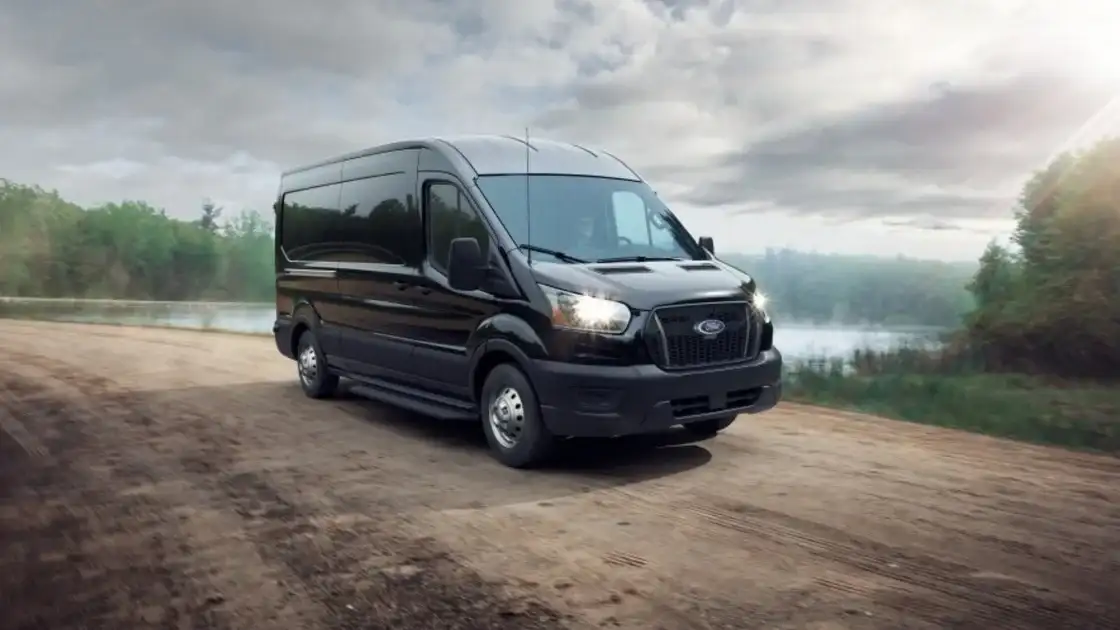
The 2027 Ford Transit® is a configurable van lineup developed for cargo transportation, passenger movement, specialized trade applications, and fully electric operation. The lineup includes the Transit® Cargo Van, Transit® Passenger Van XL, Transit® Passenger Van XLT, and E-Transit™ Cargo Van. Gas-powered models offer two available 3.5-liter V6 engines, while the E-Transit™ uses a fully electric powertrain. Multiple roof heights, body lengths, seating layouts, and drivetrain configurations allow the 2027 Ford Transit® to accommodate different operating requirements. Available trade packages, driver-assistance systems, connectivity features, and onboard power further expand its functional capabilities. Key technical areas include powertrain choices, towing and payload ratings, exterior dimensions, interior configurations, technology, safety systems, and model-specific equipment.
Powertrain and performance configurations
The 2027 Ford Transit® offers gas and electric powertrain choices across its four-model lineup. Cargo Van and Passenger Van models can use a 3.5-liter port fuel direct injection V6 or a 3.5-liter EcoBoost® V6. Gas-powered configurations pair these engine choices with a 25-gallon fuel tank or an available 31-gallon extended-range fuel tank. Rear-wheel drive serves as the standard drive configuration, while Intelligent All-Wheel Drive is available on the gas-powered 2027 Ford Transit® models. The E-Transit™ Cargo Van combines an electric motor with rear-wheel drive and a front-facing charging port. These alternatives allow buyers to select a propulsion system according to passenger capacity, cargo needs, driving range, and equipment requirements.
Gas engine choices and drivetrain equipment
The available 3.5-liter PFDi V6 provides one of the two gas-engine choices for the 2027 Ford Transit®. The available 3.5-liter EcoBoost® V6 provides another option for Cargo Van and Passenger Van configurations. Ford lists output of up to 300 horsepower for the 2027 Ford Transit® lineup. A properly configured Transit® Cargo Van can tow up to 6,900 pounds, while Transit® Passenger Van XL and XLT models can tow up to 4,500 pounds. The standard 25-gallon fuel tank supports the primary configuration, and the available 31-gallon extended-range tank increases onboard fuel capacity. These engine, fuel-tank, and towing choices allow operators to align a van with its expected transportation duties.
Available Intelligent All-Wheel Drive helps maximize traction and enhance handling. Ford integrates the system without raising the load floor or seat height, preserving the van’s cargo and passenger packaging. Selectable Drive Modes allow the driver to choose settings for different driving conditions. The system adjusts vehicle settings according to the selected mode. Rear-wheel drive remains standard for the gas-powered 2027 Ford Transit® lineup. The availability of two drivetrain configurations gives operators an additional factor to consider when selecting a 2027 Ford Transit® for a specific application.
2027 Ford E-Transit™ electric operation
The 2027 Ford E-Transit™ Cargo Van combines a fully electric powertrain with a two-passenger cargo layout. Its listed driving range varies according to the selected body configuration. The Low Roof model offers up to 166 miles of range, while the Medium Roof model offers up to 155 miles. Ford lists up to 149 miles for the High Roof model and 148 miles for the High Roof Extended Length configuration. The E-Transit™ can carry a maximum payload of 3,322 pounds. Smart Acceleration Truncation uses automatic calculations and maximum payload information to help enable smooth starts.
Available Pro Power Onboard™ supplies up to 2.4 kilowatts of power in the E-Transit™. This system provides an onboard source of power for compatible tools and equipment. The front-facing charging port positions the charging connection at the front of the van. Over-the-air capability allows the E-Transit™ to receive supported vehicle updates. Available Vehicle Integration System 2.0 supports the integration of compatible vocational equipment. These electric-specific systems complement the E-Transit™ powertrain and cargo configuration.
Disclaimer: Based on full charge. 2027 Ford E-Transit™ Enhanced Range Cargo Van Low Roof, Medium Roof and High Roof models projected range reflecting capability based on Computer-Aided Engineering (CAE) analytical adjustments from tested vehicle in line with US EPA MCT drive cycle methodology (https://fueleconomy.gov/feg/pdfs/EPA%20test%20procedure%20for%20EVs-PHEVs-11-14-2017.pdf) at ALVW (Adjusted Loaded Vehicle Weight) and adjusted for roof height. These ranges apply to vehicles fitted with Hankook tires. Actual driving range varies with conditions such as external environment, vehicle use, upfits and alteration, vehicle maintenance, high-voltage battery age and state of health.
Dimensions, payload, and cargo utility
The 2027 Ford Transit® lineup uses multiple roof heights, body lengths, and wheelbase configurations to accommodate different space requirements. Cargo Van models offer three roof heights and three body lengths, while the Passenger Van and E-Transit™ provide model-specific dimensional combinations. Maximum cargo volume depends on the selected body and roof configuration. Payload and towing ratings also vary according to the model and installed equipment. Operators can use these specifications to select a van based on occupant capacity, cargo dimensions, and load weight. The available configurations support cargo transport, passenger service, electric operation, and vocational use.
Cargo Van dimensions and capacities
The Transit® Cargo Van offers Regular, Long, and Extended body lengths. Ford lists these body lengths at 217.8 inches, 235.5 inches, and 263.9 inches, respectively. Available roof heights include a Low Roof at 82.7 inches, a Medium Roof at 99.8 inches, and a High Roof at 110 inches. Cargo Van wheelbase choices measure 130 or 148 inches, and the overall width measures 97.4 inches with the mirrors included. The High Roof and Extended Length configuration provides a maximum cargo volume of 487.3 cubic feet behind the first row. These dimensions allow buyers to prioritize a shorter body, additional interior height, or maximum enclosed cargo volume.
The Transit® Cargo Van seats two occupants and provides a maximum listed payload of 5,047 pounds in the primary model specifications. Its maximum towing capacity reaches 6,900 pounds when properly configured. Available shelving and vocational or trade packages can organize the cargo area for specialized applications. Ford also offers accessories designed to keep equipment arranged and secured during travel. Three available roof heights provide options for tall cargo and applications that require additional vertical space. Multiple body and equipment combinations allow the Cargo Van to support a range of transportation and vocational requirements.
Passenger Van packaging
The Transit® Passenger Van XL and XLT models can accommodate up to 15 people. Available seating layouts include configurations for 12 or 15 passengers. Both Passenger Van models offer Long and Extended body lengths measuring 235.5 and 263.9 inches. Available roof heights measure 82.3 inches for the Low Roof, 97.1 inches for the Medium Roof, and 108.4 inches for the High Roof. The Passenger Van uses a 148-inch wheelbase and measures 97.4 inches wide. Its High Roof and Extended Length configuration provides up to 461.9 cubic feet of cargo volume behind the first row.
Both Passenger Van variants have a maximum listed payload of 3,402 pounds and a maximum towing capacity of 4,500 pounds when properly configured. A sliding passenger-side door provides access to the passenger compartment. The Passenger Van XLT includes windows around the body for outward visibility from the cabin. The XL uses halogen headlamps with Autolamp, while the XLT includes black High-Intensity Discharge headlamps. The Passenger Van XL also includes a Safety Canopy® System with side-curtain airbags. These features distinguish the passenger-focused configurations while retaining multiple body lengths, roof heights, engine choices, and available all-wheel drive.
2027 Ford Transit® body configurations
The E-Transit™ Cargo Van offers Long and Extended body lengths measuring 235.5 and 263.9 inches. Its available roof heights include a Low Roof at 83 inches, a Medium Roof at 100.2 inches, and a High Roof at 109.4 inches in the primary model specifications. The electric model uses a 148-inch wheelbase and provides seating for two occupants. A 50/50 hinged rear door provides access to the cargo compartment. Available trade packages can adapt the interior for specific vocational equipment and storage requirements. These body configurations retain the enclosed utility of the Transit® Cargo Van while incorporating a fully electric powertrain.
Interior comfort and onboard technology
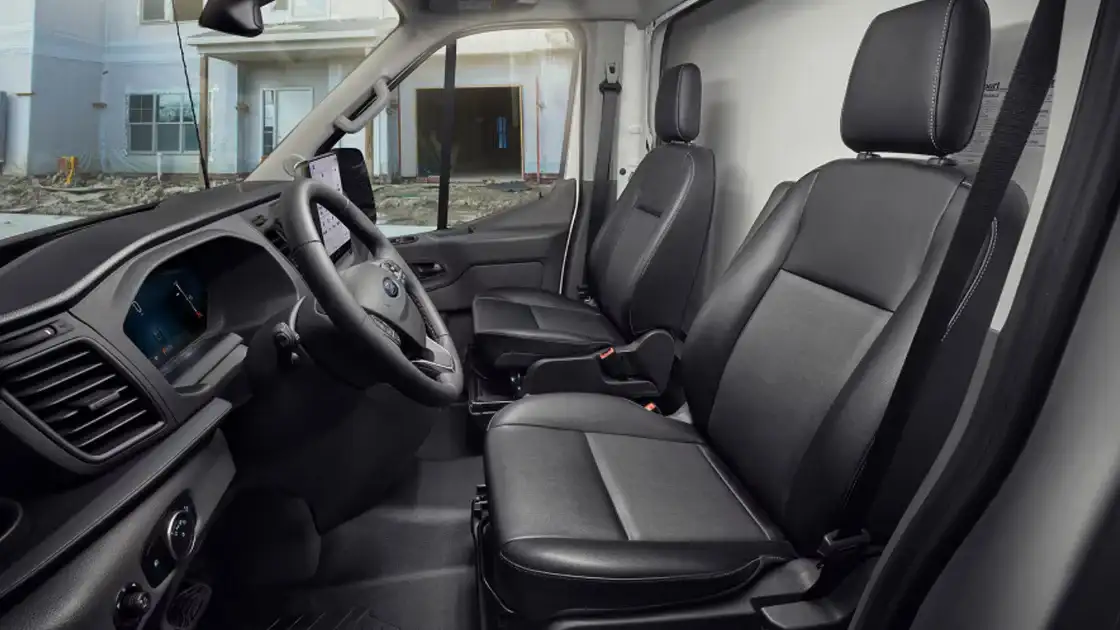
The 2027 Ford Transit® combines work-oriented cabin equipment with passenger comfort, storage provisions, and configurable seating. Cargo and Passenger Vans provide two front seating positions, while the passenger models can expand overall capacity to 12 or 15 occupants. Display technology, connectivity features, seating equipment, and onboard power vary by model and configuration. Available accessories, shelving, and trade packages support equipment organization within the cargo area. The lineup also incorporates digital displays and smartphone compatibility into its primary technology interface. These systems support vehicle operation across cargo, passenger, and specialized work configurations.
Seating and cabin equipment
The Transit® Cargo Van offers Dark Palazzo Gray vinyl or Dark Palazzo Gray cloth upholstery. Passenger Van XL uses Dark Palazzo Gray cloth, while Passenger Van XLT offers Dark Palazzo Gray vinyl, Dark Palazzo Gray cloth, or Ebony cloth choices. The XLT includes standard 10-way power heated seats for the driver and front passenger. These seats allow both front occupants to adjust their seating positions and use the heating function as needed. The E-Transit™ includes a medium center console with a rotary gear-shift dial. Across the lineup, the available seating and trim combinations reflect the different layouts of the cargo and passenger models.
The passenger compartment can accommodate group transportation with seating for up to 15 people. Operators can also configure the interior to prioritize cargo capacity when maximum passenger seating is not required. Available storage accessories help arrange equipment within the cargo area. Cargo Van shelving and trade packages provide additional organization for tools and vocational supplies. The available roof heights increase vertical room for tall items and cargo-area access in applicable configurations. This combination of seating, storage, and interior dimensions allows the 2027 Ford Transit® to accommodate several functional layouts.
Displays, connectivity, and onboard power
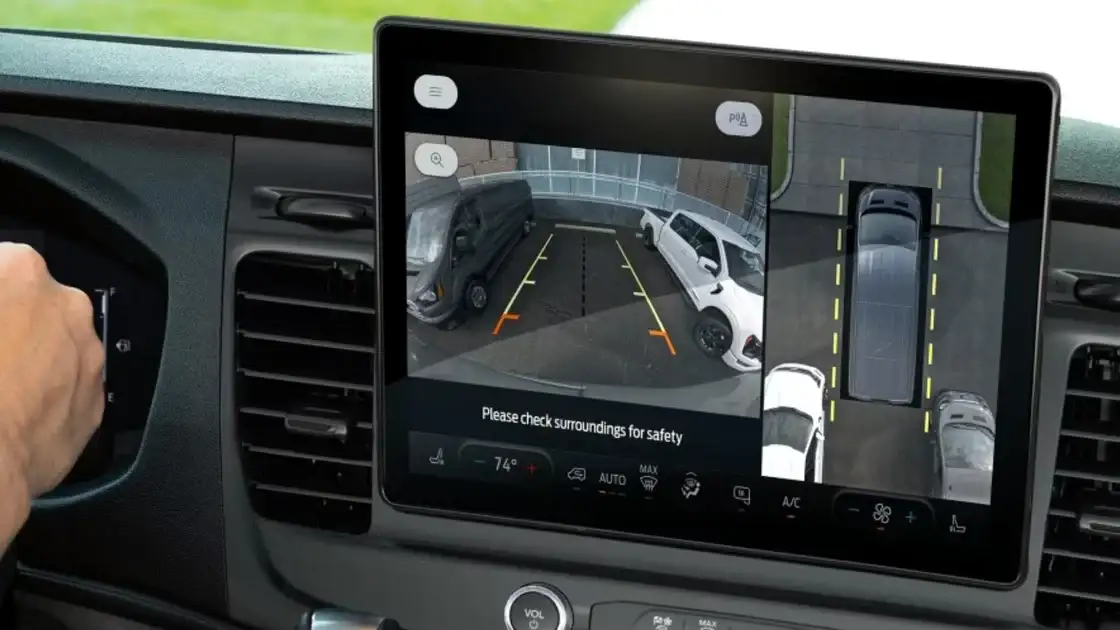
Every listed 2027 Ford Transit® model includes a digital instrument cluster with an 8-inch multifunction display. Gas-powered 2027 Ford Transit® models also include SYNC® 4 with a 12-inch center display. The system supports wireless Apple CarPlay® and Android Auto™ compatibility for compatible smartphones. A standard rearview camera provides a view behind the van, while an available 360-Degree Camera expands exterior visibility around the vehicle. The Ford Connectivity Package includes one year of service on the listed Cargo Van and Passenger Van models. Ford Pro™ Telematics also appears among the 2027 Ford Transit® Cargo Van’s technology features.
Pro Power Onboard™ provides 400 watts of output on the Transit® Cargo Van and both Passenger Van models. This system supplies onboard electrical power for compatible devices. The E-Transit™ offers an available 2.4-kilowatt Pro Power Onboard™ system. Its available Vehicle Integration System 2.0 supports connections with compatible specialized equipment. Over-the-air update capability adds another technology function to the electric model. These features combine vehicle connectivity, digital controls, and usable onboard power within the 2027 Ford Transit® lineup.
Driver assistance and safety technology
The 2027 Ford Transit® uses cameras, sensors, braking support, and driver-assistance features to help the driver monitor traffic and nearby objects. Equipment varies by model, with Ford Co-Pilot360™ included across the gas-powered lineup and additional systems available or standard on selected configurations. The standard rearview camera assists during reversing, while front and rear parking sensors monitor areas near the vehicle. Lane and collision-support technologies address common driving situations. Passenger-focused safety equipment accounts for occupants beyond the front seating area. The driver remains responsible for vehicle control and attention while using these assistance systems.
Ford Co-Pilot360™ systems
Ford Co-Pilot360™ technology includes front and rear parking sensors, Pre-Collision Assist® with Automatic Emergency Braking, and a Lane-Keeping System. The parking sensors provide assistance when maneuvering near detected objects. Pre-Collision Assist® with Automatic Emergency Braking can provide support when the system detects a potential frontal collision. The Lane-Keeping System monitors the vehicle’s position relative to detected lane markings. These functions operate alongside the standard rearview camera. Their inclusion provides a consistent driver-assistance foundation across the gas-powered 2027 Ford Transit® lineup.
The Transit® Passenger Van XLT adds standard Ford Co-Pilot360™ Assist 2.0 with Adaptive Cruise Control and a 360-Degree Camera. The XLT also includes the standard BLIS® Blind Spot Information System. Available front fog lamps on the Cargo Van come with the side-sensing system and 360-Degree Camera with Split View. The E-Transit™ offers available Reverse Brake Assist, BLIS®, and a 360-Degree Camera. Power-folding heated mirrors appear across the gas-powered 2027 Ford Transit® models. This range of available equipment lets buyers select additional monitoring, visibility, and braking-support functions.
Security and passenger protection
The 2027 Ford Transit® offers an available Ford Security Package. Its functions include theft alerts, remote vehicle lockdown, and recovery services. These features add vehicle-monitoring functions to the 2027 Ford Transit® equipment range. The Passenger Van XL includes a Safety Canopy® System with side-curtain airbags. This system extends airbag coverage into the passenger compartment. Combined with the available driver-assistance technologies, these features address vehicle security, occupant protection, exterior awareness, and braking support.
Schedule a Test Ride at Friendship Ford of Bristol
Schedule a test drive at Friendship Ford of Bristol in Kingsport, TN, to examine the 2027 Ford Transit® and its available configurations. Our team can help you review its gas and electric powertrain choices, body dimensions, seating layouts, payload ratings, and onboard technology. During the drive, you can assess cabin comfort, handling, display operation, visibility, and the functions of equipped safety and driver-assistance systems. We can also explain how available all-wheel drive, roof heights, body lengths, trade packages, and Pro Power Onboard™ equipment relate to different operating requirements. Contact us to arrange an appointment and evaluate a 2027 Ford Transit® configuration for your passenger, cargo, or vocational needs.
