

Ford Bronco vs Toyota 4Runner in Bristol, TN
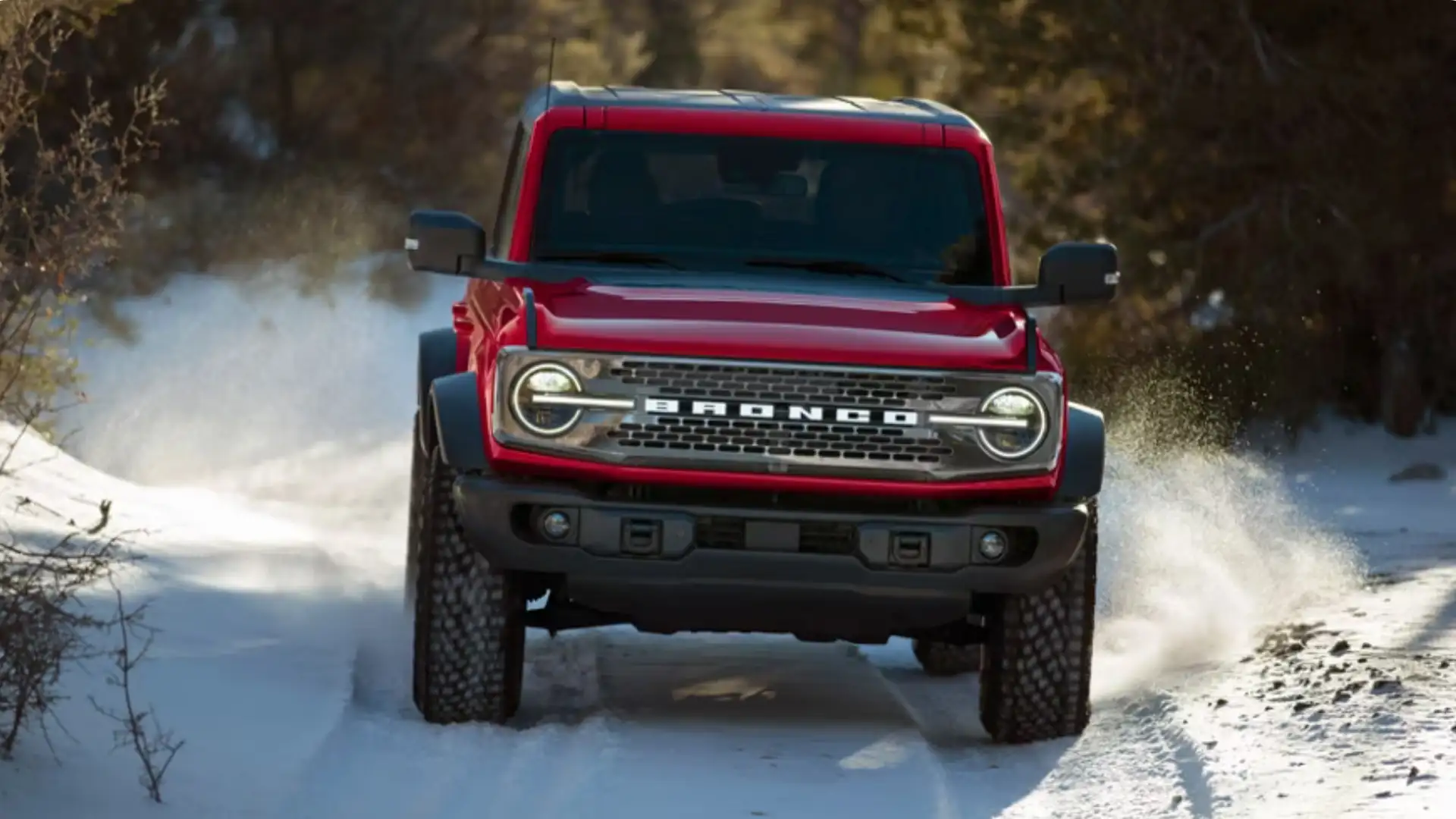
The 2025 Ford Bronco integrates engineering upgrades that enhance performance, comfort, and technology without compromising the durability expected of an off-road SUV. It demonstrates structural precision and updated systems that improve both rugged and city driving characteristics. The Toyota 4Runner maintains proven dependability but shows minimal evolution in powertrain, digital systems, and cabin refinement. This comparison evaluates both models across power, efficiency, suspension design, safety systems, and everyday urban drivability from a dealership perspective.
Structural Engineering and Build Composition
The 2025 Ford Bronco is constructed with a fully boxed high-strength steel frame for optimal rigidity and load support. The design combines aluminum body panels with corrosion-resistant materials to reduce weight and maintain strength. A factory-installed Matte Clear Film, new for 2025, adds exterior protection against abrasion, road debris, and environmental wear while producing a uniform matte surface finish. The modular structure allows the removal of doors and roof panels, enabling multiple configurations for different driving conditions.
The Toyota 4Runner continues to employ a traditional body-on-frame layout. While effective for durability, this platform increases vehicle weight and limits modular flexibility. Its steel body and frame construction are robust but less adaptive to aerodynamic or comfort-oriented refinements. The 2025 Ford Bronco’s blend of materials and protective coatings results in reduced drag, lower noise, and a lighter structure suited for both off-road terrain and daily commutes.
Powertrain and Transmission Systems
The 2025 Ford Bronco offers two EcoBoost® turbocharged engines. The standard 2.3-liter inline-four produces approximately 300 horsepower and 325 lb-ft of torque. The available 2.7-liter twin-turbo V6 generates around 330 horsepower and 415 lb-ft of torque. Both options pair with a 10-speed automatic transmission engineered for smooth torque distribution and minimal gear hunting. A 7-speed manual is available for drivers who prefer direct mechanical control during technical off-road maneuvers. The wide ratio spread of the automatic transmission improves both acceleration and low-speed efficiency, particularly noticeable in urban traffic flow.
Toyota’s 4.0-liter naturally aspirated V6 delivers about 270 horsepower and 278 lb-ft of torque through a 5-speed automatic transmission. Its gearing is less flexible, leading to higher RPM operation in city driving and reduced responsiveness under moderate throttle input. The 2025 Ford Bronco’s turbocharging system provides stronger torque at lower engine speeds, allowing it to maintain steady performance during start-stop conditions without strain. This results in greater efficiency and reduced vibration when accelerating from idle in congested areas.
Suspension and Ride Stability
Ford equips the 2025 Ford Bronco with an independent front suspension and a five-link coil spring rear design. This layout combines precision handling with balanced articulation. The optional Sasquatch® Package introduces Bilstein position-sensitive dampers that automatically adjust compression to surface conditions. For 2025, new Goodyear Territory rugged terrain tires have been tuned to lower cabin noise at highway speeds while preserving off-road grip. Together, these elements ensure stable cornering on pavement and strong impact control on uneven ground.
The Toyota 4Runner features a double-wishbone front suspension and a solid rear axle. While durable, this design transmits more vibration to the cabin during asphalt driving. Even with TRD Pro tuning, ride firmness remains noticeable on rough pavement. The 2025 Ford Bronco’s wider track width and adaptive damping contribute to reduced body motion and improved steering feedback during urban and suburban use, creating a smoother and more predictable ride in variable traffic conditions.
Exterior Configuration and Functional Design
The 2025 Ford Bronco introduces the Black Appearance Package, featuring Shadow Black-painted hardtop, black grille with white BRONCO lettering, black fender flares, and black molded mirror caps. These updates emphasize function through color uniformity that reduces glare and improves visibility in bright environments. The optional Matte Clear Film provides chemical and debris resistance, extending surface integrity through multiple seasons. Each element serves a mechanical purpose by enhancing durability or aerodynamics rather than aesthetic effect alone.
Toyota maintains a fixed roof and door design on all Toyota 4Runner trims. The structure offers high ground clearance but lacks convertible adaptability or paint protection technologies comparable to Ford’s Matte Clear Film. The 2025 Ford Bronco’s modular architecture allows configuration changes for open-air operation or enhanced weather resistance, adding mechanical and practical versatility to its design.
Cabin Engineering and Interior Systems
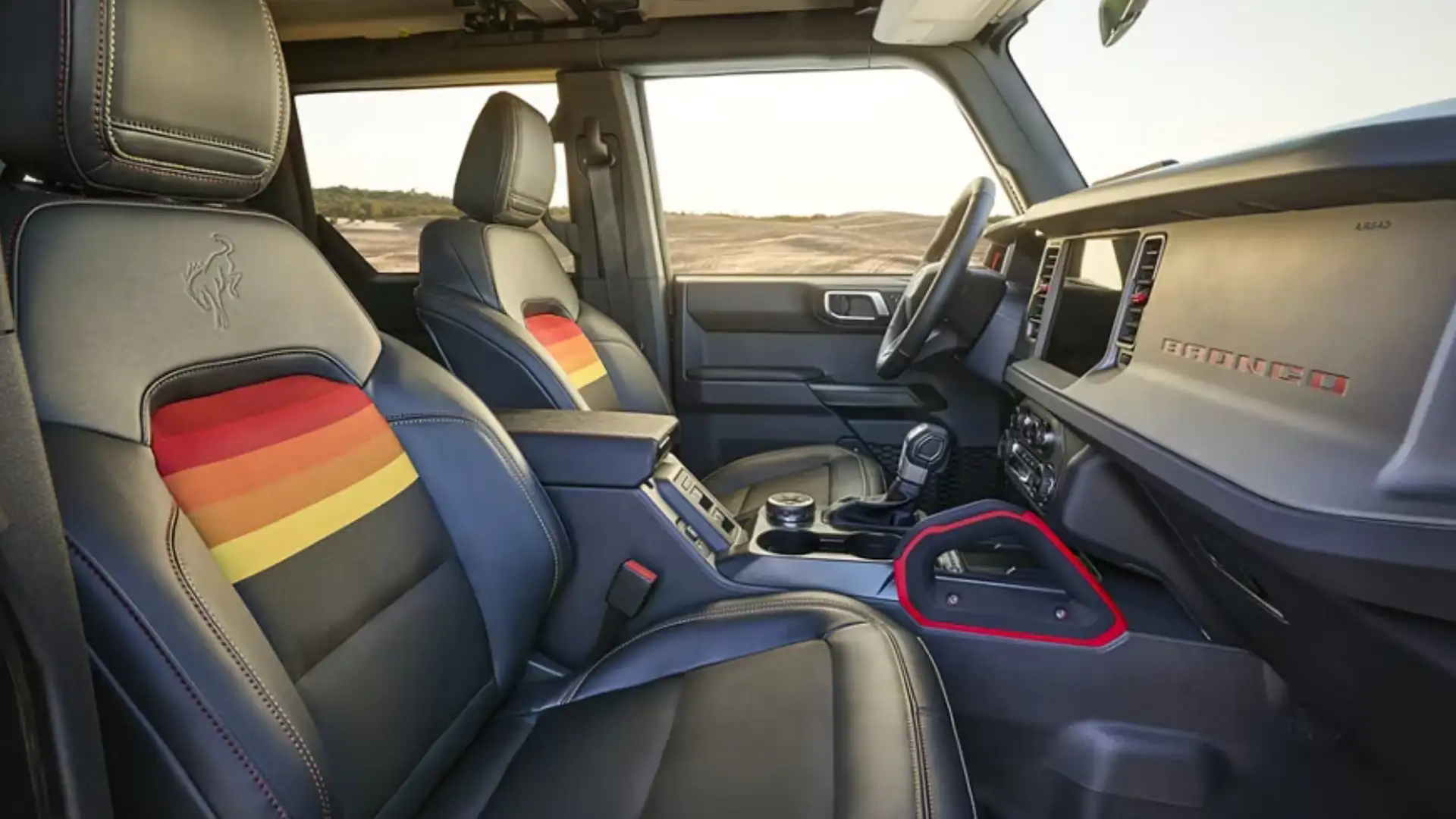
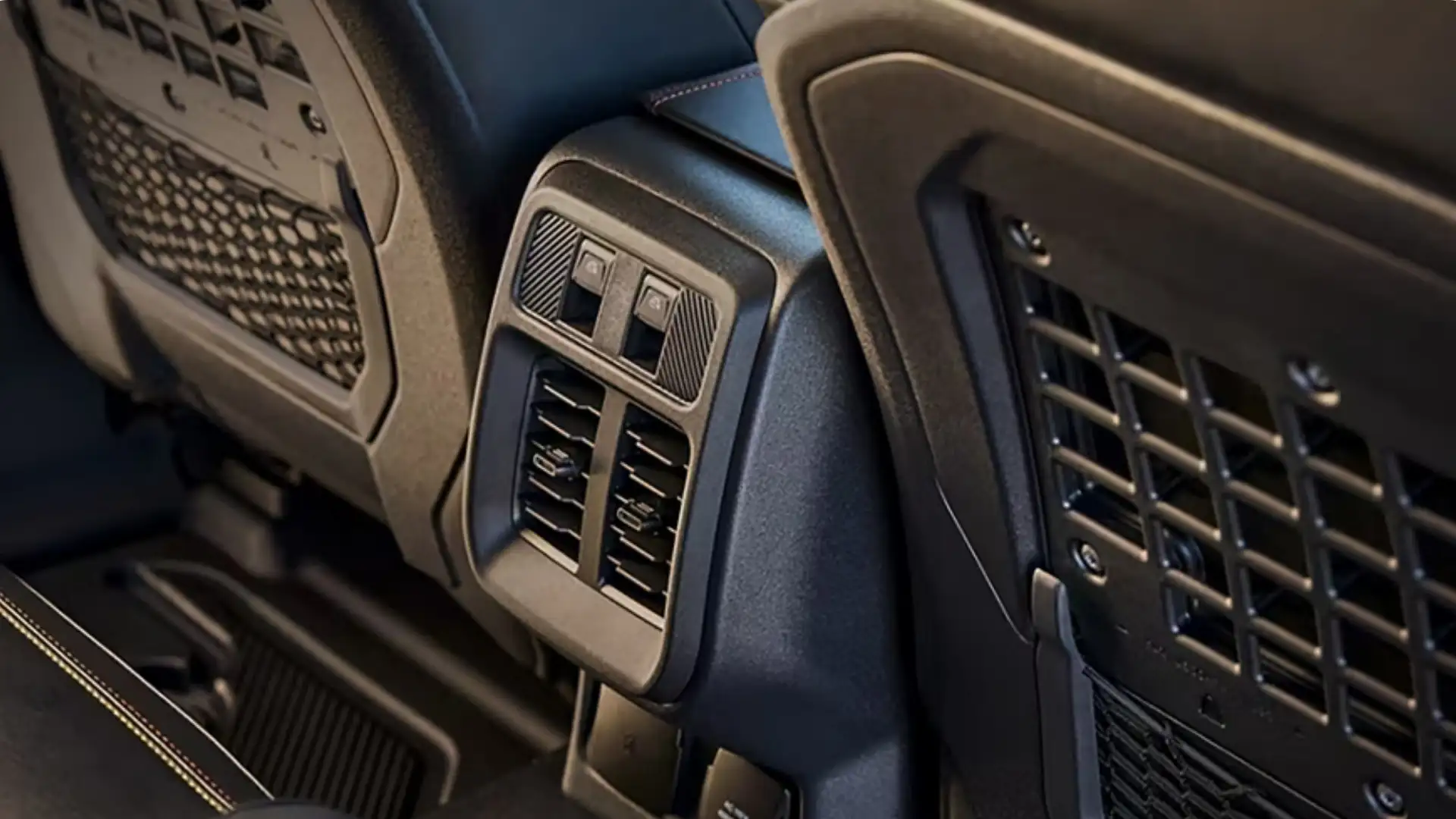
Inside the 2025 Ford Bronco, two 12-inch digital screens serve as the instrument cluster and central infotainment system. The digital gauge cluster provides full-color visual feedback synchronized with each G.O.A.T. mode, displaying drivetrain, steering, and suspension data. The SYNC® 4 interface supports over-the-air updates, navigation, and wireless smartphone connectivity. These systems operate on a high-speed processor to ensure responsiveness and reliability. Ford adds sound insulation to reduce decibel levels during acceleration and introduces second-row air vents for consistent airflow in four-door models. Cabin lighting has been expanded for better visibility during low-light operation.
A new 12-speaker B&O® audio configuration replaces the previous 10-speaker setup. It integrates an upgraded amplifier and subwoofer to produce higher audio clarity and frequency precision. Interior materials are built for endurance, with easy-clean surfaces resistant to moisture and dust. The Toyota 4Runner retains a more conventional dashboard layout, with smaller screen sizes and limited connectivity. While functional, it lacks digital instrumentation and update compatibility, which reduces its technological lifespan over time.
Technology Integration and Connectivity Features
Ford’s SYNC® 4 technology provides wireless Apple CarPlay® and Android Auto™ along with FordPass® connectivity. These systems allow remote vehicle access, engine start, and diagnostic checks through a mobile interface. The over-the-air update function ensures that navigation data, interface improvements, and firmware upgrades are installed automatically. Ford’s networked vehicle architecture enables electronic system synchronization without manual service updates.
Toyota’s multimedia setup supports basic smartphone integration but does not feature wireless connectivity or remote vehicle management. Updates require manual service or connection to an external source. The 2025 Ford Bronco’s digital network infrastructure reflects current industry standards for adaptive connectivity, maintaining long-term compatibility across future software cycles.
Safety Systems and Driver Assistance Technology
Every 2025 Ford Bronco comes with Ford Co-Pilot360™ driver assistance features. This system includes adaptive cruise control, lane-keeping assist, blind-spot monitoring, pre-collision assist with automatic emergency braking, and rear cross-traffic alert. Roll stability control and traction management are calibrated for vehicles equipped with removable roof panels to maintain balance and rollover resistance. The 360-degree camera system displays multiple exterior angles, providing accurate positioning feedback during trail navigation and urban parking maneuvers.
The Toyota 4Runner’s Safety Sense P suite covers similar functions but lacks the 2025 Ford Bronco’s sensor density and customization options. Its radar and camera modules use earlier generation software that limits predictive response in complex traffic environments. The 2025 Ford Bronco’s integration of digital driver aids and structural reinforcement yields higher operational safety during varied driving speeds and conditions.
Efficiency and City-Level Performance
Turbocharging efficiency gives the 2025 Ford Bronco an advantage in urban driving. The 2.3-liter and 2.7-liter engines maintain optimal boost levels at lower RPMs, producing consistent torque output under light throttle use. This design reduces gear changes during stop-and-go movement, minimizing transmission wear and fuel waste. The 10-speed automatic keeps the engine operating within its most efficient range, supporting balanced acceleration in dense traffic. Engine start-stop functionality further enhances city efficiency by limiting idle fuel consumption.
In tight urban spaces, the 2025 Ford Bronco’s electric power-assisted steering provides steady control and improved turning precision compared to the Toyota 4Runner’s heavier hydraulic system. Noise insulation and recalibrated tires contribute to reduced cabin vibration across uneven pavement. The 2025 Ford Bronco’s suspension tuning and steering ratio deliver smoother transitions during cornering or lane changes, offering greater control in compact street environments. The cabin maintains consistent quietness even under low-speed braking or acceleration.
The Toyota 4Runner’s naturally aspirated engine requires higher RPMs to generate comparable torque, increasing fuel use and vibration in city operation. Its 5-speed automatic often holds gears longer, reducing efficiency in variable speed limits. Steering input is heavier and less responsive, making frequent maneuvers in city settings more labor-intensive. The 2025 Ford Bronco’s engineering prioritizes adaptable throttle response, noise suppression, and refined steering calibration to ensure controlled operation within both off-road and city conditions.
Schedule a Test Ride Today
Experience the engineering precision of the 2025 Ford Bronco by scheduling a test drive with Friendship Ford of Bristol in Bristol, TN. The 2025 Ford Bronco’s turbocharged powertrains, multi-link suspension, and digital connectivity systems demonstrate measurable advantages in both trail and city environments. Observing its handling response, transmission behavior, and driver assistance technology firsthand provides a clear understanding of its performance capabilities. The refined cabin design and sound insulation make it well-suited for everyday commuting as well as extended travel. Arrange your test drive today to evaluate its balanced performance, efficient city dynamics, and advanced safety systems in person.
